 Sondra
 I offer several modalities for restorative care. My goal is to empower others of all ages to reclaim a better level of wellness through a more holistic approach utilizing the modalities of massage, reflexology, and energy work, with attention to the nervous system and overall wellbeing, alongside education in self-care strategies.
How does massage impact myofibroblasts?
Massage can help “reset” myofibroblast activity by influencing collagen remodeling, reducing fibrosis, and promoting tissue repair through mechanisms like mechanical stress and enhanced circulation. By applying mechanical forces, massage can modulate fibroblast activity, influence the extracellular matrix, and break down scar tissue, which helps to restore more normal tissue function and reduces the overactivity that can lead to issues like fibrosis.
Mechanical stress and remodeling: Massage applies mechanical force to tissues, which can influence the behavior of fibroblasts and myofibroblasts. This can help change the orientation of the cells and modulate their activity.
Reduced fibrosis. In conditions where myofibroblasts lead to excessive scarring (fibrosis), massage can help reduce it. Research has shown that massage can promote tissue repair and reduce fibrosis by remodeling collagen, which is the main component of the extracellular matrix that myofibroblasts produce.
Enhanced circulation. Massage can improve circulation, bringing more oxygen and nutrients to the tissues and helping to clear waste products that can contribute to tissue damage and inflammation.
Modulating inflammation. By improving circulation and potentially influencing mechanoreceptors, massage can help reduce inflammation, which is often a trigger for myofibroblast activity.
Stimulating other cells. Massage can also stimulate other cells, like satellite cells in muscle tissue, to proliferate and contribute to a healthier tissue repair process, notes the National Institutes of Health.
Cross-fiber friction, myofascial spreading, and circular friction are designed to apply mechanical stress to the tissues and can help break down adhesions and modify the activity of myofibroblasts, and regular massage sessions are more likely to have a lasting effect on myofibroblast activity and tissue remodeling than infrequent sessions. Massage can be used in conjunction with other therapies like physical therapy and exercise to further improve range of motion and function.
Myofascial Release Therapy
For those who are interested in massage for a restful, calming (cholinergic) response, the relaxation-recovery massage is a gentle massage that releases tightness and pain in the myofascial tissues. Light strokes work with the lymphatic system, opening the collectors and working toward draining the system during the massage, with a focus is on releasing tension in the tissues. “Myo” is muscle, and “fascial” refers to the connective tissue that covers and supports the muscles and other structures throughout your body. Sessions close with modified Thai foot massage.
Reflexology
Foot Reflexology stimulates areas in the feet to increase the function of all body systems for greater optimal health. Reflexology has been found helpful in supporting the lymphatic system by stimulating reflex points on the feet (and hands) to encourage lymph flow, reduce swelling, and help the body detoxify, often providing relief for conditions like lymphedema and lipedema. There are areas on the feet correspond to the hypothalamus, pituitary and endocrine system. Gentle stimulation may support nervous system regulation and stress reduction, relaxation of the HPA axis (hypothalamus–pituitary–adrenal axis), and overall wellbeing alongside other current medical care.
Reflexology Lymph Drainage (RLD) is an award-winning protocol which stimulates reflex points in a unique sequence, following the principles of manual lymphatic drainage but applying them to the feet or hands. This method assists with lymphedema and lipedema and has been used in lieu of whole-body manual lymphatic drainage treatments. RLD treatments are beneficial for those without medical insurance coverage, those wanting to remain dressed during treatments, those seeking an alternative to MLD, and those wanting a boost in health.
Scar Release
Scars can restrict and bind fascia, influencing muscles and nerves — they can produce a straitjacket effect throughout the entire body. Scars can block the movement of circulation and energy, which interferes with health and wellness. Scars cause sympathetic nervous system upregulation and act as stress agonists, creating an environment for illness and chronic pain. I will be offering scar release in the near future.
Add-On Services
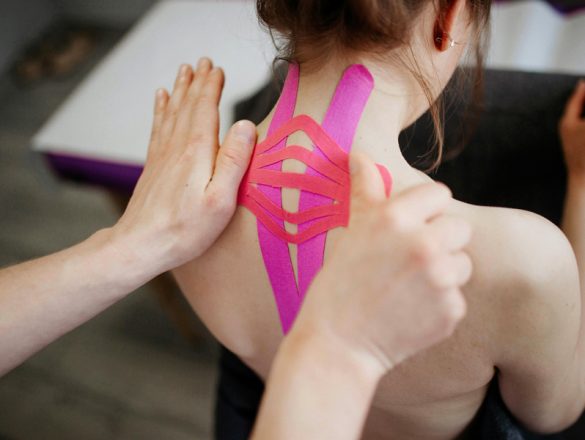
To boost lymph movement, therapeutic lymphatic taping lifts the skin to improve lymphatic movement. Tape should be removed after three days to preserve skin integrity or removed if experiencing itching or redness, as this indicates a reaction to the adhesive. Remove the tape slowly, ideally while wet in the shower or by using oil/lotion to break down the adhesive.
MLD, massage, or reflexology sessions can be combined with vibroacoustic table therapy to enhance lymphatic movement.