 Sondra
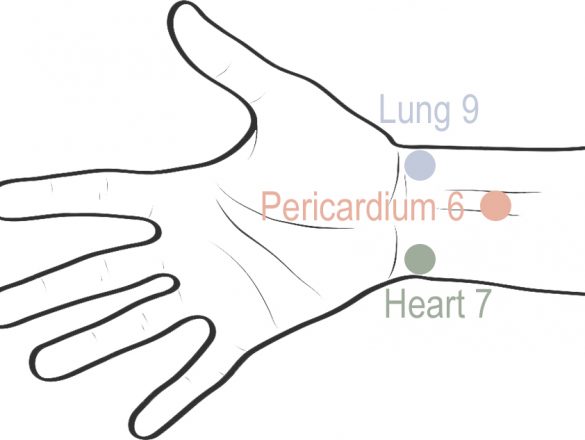
 Acupressure points Heart 7, Lung 9, and Pericardium 6 are key points located on the wrist and forearm, often used together to manage stress, anxiety, nausea, and emotional instability — sometimes referred to as the “Buddha’s Triangle.” When combined, these points are used to calm the mind, relieve anxiety, and promote deep breathing.
Pericardium 6
Pericardium 6 (PC6) is also known as Neiguan or the Inner Gate. This acupressure point is located on the inner forearm three finger-widths below the wrist crease between the two prominent tendons. Neiguan offers many benefits:
Digestive relief. PC6 is the primary point for alleviating nausea, vomiting, morning sickness, and motion sickness.
Cardiovascular Health. Acupressure at this point reduces sympathetic nervous activity, which helps with arrhythmias, high blood pressure, and angina.
Mental and emotional balance. PC6 helps calm the mind (Shen), reduce anxiety, and improve sleep.
Pain management. PC6 can be used for pain in the chest, hypochondriac region, and for carpal tunnel syndrome.
Other uses. PC6 can help with hiccups, insomnia, and palpitations.
How to Find and Use PC6
Place your first three fingers (index, middle, and ring) across the opposite wrist crease. The point is located just below your index finger, in the center of your inner arm between the two prominent tendons.
Apply firm, consistent pressure with your thumb for 1 to 2 minutes. You can use a circular motion to massage the area. Repeat on both wrists several times a day as needed. While generally safe, improper or excessive pressure may cause mild side effects like tenderness.
The PC6 point is a well-studied, non-invasive method for relieving nausea, with effects often felt within 10 to 30 seconds or sometimes up to 5 minutes.
Heart 7
Heart 7 (HT7) is also known as Shen Men or the Spirit Gate. This key acupressure point is on the inner wrist crease, located on the pinky-finger side just inside the tendon, in the small hollow. Shen Men offers many benefits:
Mental and emotional calm. Known as a “Spirit Gate,” it is primarily used to treat anxiety, agitation, restlessness, and mental sadness.
Sleep improvement. It is a major point for treating insomnia and improving sleep quality.
Cardiovascular support. It is used to relieve heart palpitations and chest tightness.
Addiction and withdrawal. It is effective in managing cravings for alcohol or nicotine withdrawal.
Neurological regulation. Studies suggest HT7 can help with vertigo, motion sickness, and epilepsy.
Pain management. It is used to help with pain and discomfort associated with fibromyalgia
How to Find and Use HT7
This acupressure point is found on the wrist crease, on the radial side of the small tendon on the ulnar/pinky side, in the slight depression. Apply gentle, deep, or circular pressure for 1–3 minutes or until you feel a sense of calm.
Lung 9
Lung 9 (LU9) is also known as Taiyuan or the Great Abyss. This point is located on the thumb side of the wrist crease, in the depression just below the thumb, specifically where the radial artery pulses on the thumb side. Taiyuan offers many benefits:
Respiratory support. It is highly effective for chronic cough, asthma, wheezing, and shortness of breath.
Phlegm reduction. It helps clear phlegm, both copious/watery (due to qi deficiency) and scanty/dry (due to yin deficiency).
Strengthens lung qi/yin. As a tonification point, it boosts overall lung function, particularly when deficient.
Vascular health. Known as the “Influential Point of the Vessels,” it helps regulate blood circulation, treats weak pulses, and addresses conditions like chest pain or palpitations.
Emotional balance. It is used to process grief, despair, and emotional instability.
Physical relief. It is used to treat localized pain, such as wrist pain, and helps with symptoms like cold/pain in the lower extremities.
How to Find and Use LU9
This pressure point is located on the thumb side of the wrist, in the depression of the wrist crease between the radial artery and the tendon of the thumb muscle. Apply firm, gentle pressure to the depression for 30 seconds to 3 minutes. Avoid deep or intense pressure directly on the radial artery.
LU9 is considered the Yuan-Source point (source of energy) of the Lung meridian and a Hui-Meeting point of the Vessels, making it highly effective for influencing blood vessels throughout the body.
Acupressure for Buddha’s Triangle
Applying acupressure pellets or seeds to these points provides continuous, gentle stimulation, making it an effective, non-invasive method for reducing stress, improving sleep, and managing nausea. Acupressure pellets (such as Vaccaria seeds, stainless steel, or gold-plated pellets) are small, adhesive-backed devices designed to offer passive, continuous pressure.
Applying Pellets or Seeds
Clean the skin with soap and water or an alcohol swab to ensure the adhesive stays in place. Locate the points to precisely identify PC6, HT7, and LU9. Remove the adhesive backing and place the pellet directly on the identified point. Press the pellet firmly for a few seconds to stimulate the point and ensure it sticks. Pellets can be left in place for 3–5 days.
Gently press and massage the pellets 2–3 times a day for 1–3 minutes to boost the effect. Remove pellets after 3-5 days, let the skin rest for a day, and reapply to the same or opposite wrist if needed.
If using adhesive patches, ensure they are not causing skin irritation or cutting off circulation. Remove the pellets if the skin becomes irritated, red, or blistered. These points can be used on either the right or left wrist, or both simultaneously. Do not apply pellets on broken skin or a fresh injury.