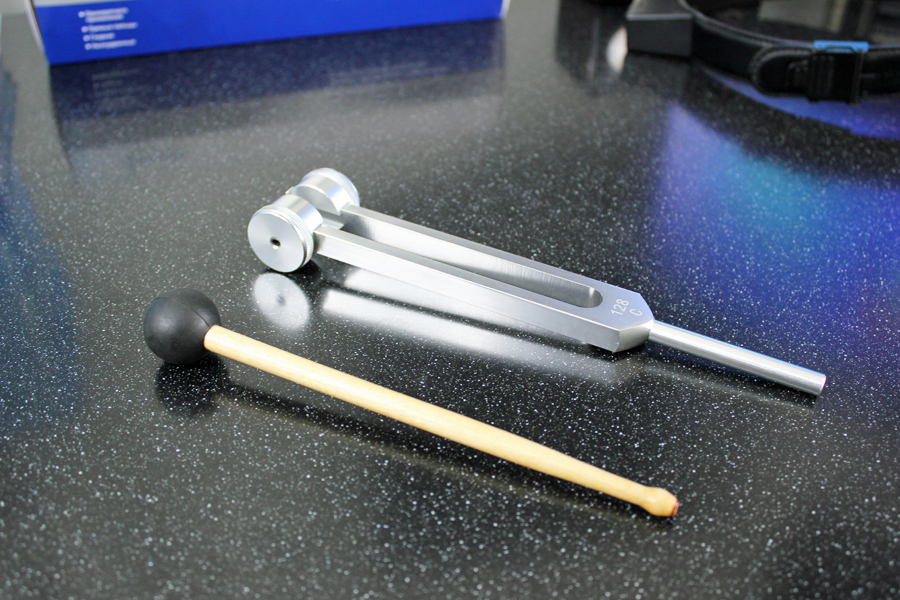
Sound bowls and tuning forks are tools for vibrational healing, using resonant frequencies to promote relaxation, relieve tension, and balance the body’s energy system. Tuning forks can be placed directly on acupuncture points or bones for targeted stimulation, while singing bowls provide immersive, deep soundscapes for clearing energy centers.
Tuning Forks
Tuning forks are sound instruments designed to emit specific vibrations and frequencies which are used to promote relaxation, relieve stress, alleviate pain, and balance the body’s energy fields. Weighted forks are applied directly to the body for physical sensations, while unweighted forks are held near the ears for auditory stimulation.
What are the types of tuning forks?
Weighted tuning forks. These types of forks produce strong, localized vibrations with little sound. They have weights at the tips to produce stronger, more sustained vibrations and are ideal for placing on bones, joints, and acupressure points to stimulate nerves and blood flow and relieve tension. These forks can be used on acupressure/meridian points and used to stimulate specific energy pathways without needles, often focusing on points to aid in sleep or emotional release.
Unweighted tuning forks. These are used primarily for sound therapy by holding them near the ears to affect the nervous system and the energetic body. They are typically used around the body’s energy field (biofield) to clear blockages and reduce stress.
How are tuning forks used?
Physical. Strike the tuning fork on a rubber mallet or your palm and place the base on specific areas of the body, such as the sternum, jaw, or a joint, allowing the vibration to penetrate.
Energetic. Pass the vibrating fork around the body’s energetic field (biofield) to encourage balance.
Use a rubber activator to strike the fork, then place the stem end directly on the body, at points of pain, on acupressure points, or pass the fork through the biofield. These techniques can be combined with Reiki, meditation, or yoga.
What are the benefits of using turning forks?
Physical. The use of tuning forks on the body can reduce chronic pain, relieve headaches, and aid in reducing muscle cramps.
Mental and/or emotional. Sound can reduce stress and fatigue, promote deep relaxation, and improve focus.
Vibrational alignment. Sound helps align body and mind, acting as a “reset” for body tissues that are stressed or blocked.
Sound Bowls
Sound bowls can also be placed on the body (also known as sound massage or vibroacoustic therapy) and use vibration and sound waves to induce deep relaxation, lower stress, and relieve physical tension. By placing singing bowls on areas like the back or chest, vibrations penetrate the body, aiming to ease pain, improve mood, and release energetic blockages.
How are sound bowls used?
Vibrational massage. Singing bowls (either crystal or metal) can be placed on the body (such as on the belly or chest) to create profound resonant waves that penetrate tissues. Sound bowls can be gently placed on specific body parts or around the client while they lie down. The practitioner strikes or rubs the bowls with a mallet, producing sustained, resonant tones and vibrations.
Practitioners often recommend Tibetan or metal bowls for direct placement on the body due to their resonance. The experience is often described as feeling the “sound” within the body, which is particularly effective because the body is made mostly of water, allowing it to carry the vibrations.
Chakra balancing. Bowls can be placed on or near specific chakras (energy centers) to activate them and encourage energetic alignment.
What are the benefits of using sound bowls?
Deep relaxation. The vibrations stimulate the nervous system, encouraging a state similar to deep meditation and reducing stress hormones like cortisol.
Physical relief. The vibrations can help relieve chronic pain, tension in muscles, and fatigue.
Energy balancing. Sound practitioners use bowls placed on or near the body to target specific chakra points, aiming to clear energy blockages and promote overall well-being.
Vibroacoustic massage. When placed on the body (often at the back, hips, or chest), the sound produces a subtle, deep-tissue massage effect, resulting in a feeling of warmth.
About Sound Therapy
Deep relaxation through resonant, layered sound leverages the brain’s natural ability to synchronize with external rhythms (brainwave entrainment) to shift from active, stressful beta states into calmer alpha (8-12 Hz) or theta (4-8 Hz) states. This process is often used in sound therapy to promote a “rest-and-digest” nervous system response, easing anxiety and facilitating deep sleep.
What are the benefits of sound therapy?
Reduction in stress and anxiety. Sound therapy, such as binaural beats, reduces cortisol levels and lowers heart rate, mitigating feelings of stress, panic, and anxiety.
Improved sleep. By guiding the brain into theta and delta states, sound therapy helps treat insomnia and encourages faster sleep onset and deeper, more restorative rest.
Pain relief. The soothing vibrations can lower pain perception, reduce inflammation, and alleviate muscle tension, making it an effective adjunctive tool for chronic pain and post-operative recovery.
Mental clarity and focus. By calming mental chatter and reducing stress-induced “brain fog,” sound therapy can enhance cognitive function, focus, and creativity.
Immune system support. Consistent relaxation and deep sleep supported by these frequencies can support the body’s natural healing processes.
Is sound therapy safe?
Sound therapy is generally safe but should not replace professional medical or psychological treatment for chronic conditions. Sound therapy is best suited for individuals looking to manage stress, anxiety, or pain.
Sound baths and deep relaxation techniques can sometimes trigger emotional releases or resurface traumatic memories and should be approached with care.
Individuals with epilepsy or those prone to seizures should consult a doctor before using sound therapies like isochronic tones or binaural beats. Those with pacemakers or other medical devices should consult a doctor prior to use.