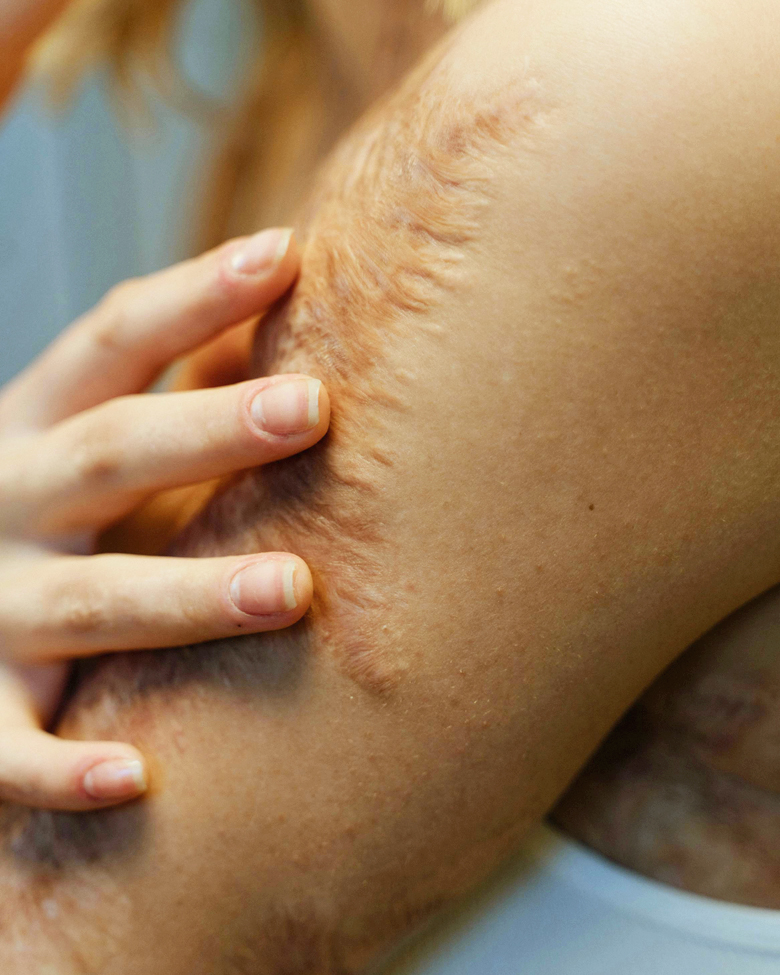
Scar Release Therapies
for Scarred and Fibrotic Tissue
Scars can restrict and bind fascia, influencing muscles and nerves and can produce a straitjacket effect throughout the entire body. Scars can block the movement of circulation and energy, which interferes with health and wellness. Scars cause sympathetic nervous system upregulation and act as stress agonists, creating an environment for illness and chronic pain. Scar release features therapies used to break down fascial adhesions and soften scar tissue. By improving local blood flow, lymph circulation, and nervous system response, it helps relieve pain, restore range of motion, and reduce hypersensitivity or pulling sensations. Scar tissue therapies use physical and medical methods to break down fibrous buildup, reduce pain, and improve skin flexibility, and treatment is individually crafted to reduce scar tissue and enhance healing.What are ways to treat scar tissue?
High-speed vibration devices targeting scar tissue rely on rapid, low-amplitude oscillations to break up tissue adhesions, increase blood circulation, and reduce local numbness. Rather than pounding the skin like a standard heavy percussive massage gun, these specialized tools use targeted high frequencies — often between 100 Hz and 170 Hz — to create a “shearing” effect that helps stubborn, unyielding scar collagen flatten and soften.
Negative pressure therapy is an effective approach to enhance post-surgery flexibility and promote pain relief. This method uses controlled suction to improve skin blood flow, soften tight tissue, and reduce scar thickness. The therapy’s suction technique not only increases collagen and elastin but also releases fascia and breaks down scar tissue, leading to a significant improvement in range of motion. Additionally, it stimulates blood flow to the targeted areas, further facilitating mobility. Supported by research, it is recognized as a safe and effective method for increasing mobility and aiding the healing process.
Primarily an in-clinic device, LymphaTouch® uniquely combines mechanical vibration with negative pressure (suction). It lifts and pulls the skin while vibrating, which prevents the matted layers of a deep scar from compressing down into underlying muscles or tendons. The creates a pressure difference that opens tiny blood vessels and increases circulation in stiff scar tissue. The mechanical pull helps organize disorganized collagen fibers and loosens tight areas. Devices such as LymphaTouch® promote lymphatic drainage and oxygenation.
Manual therapies include cross-friction massage, skin rolling, and myofascial release.
Instrument-assisted soft tissue mobilization utilizes specialized stainless-steel or composite tools to glide over the area and mechanically remodel tight scar tissue.
Active release technique uses application of direct tension to the restricted tissue while you actively move the nearby joint or muscle through a full range of motion.
Radio frequency stimulates the production of collagen and elastin, making scar tissue more flexible, which facilitates its release and the use of suction cups or a suction machine.
In some cases where scar tissue has formed in fatty areas, the use of ultrasonic cavitation is necessary to minimize the fatty layer so that the tissue can be released.
Kinesiology taping is a popular form of athletic tape that has gained recognition for its therapeutic properties. This elastic adhesive tape has been utilized for a wide range of conditions, including post-plastic surgery.
Microcurrent therapy uses very low-level electrical current to help soften, remodel, and reduce the appearance and tension of scar tissue. Microcurrent increases intracellular production of adenosine triphosphate, the energy currency of cells, by up to 500%, which drives cellular repair and regeneration. It supports fibroblast regulation and collagen organization, helping flatten and smooth uneven scar texture. Microcurrent enhances local blood and lymphatic flow, delivering oxygen and clearing out inflammatory waste products. It also relaxes tight connective tissue and calms the local nervous system to decrease pain and physical restriction.
How does scar release work?
Softens fibrotic tissues. Scars form rigid, haphazard collagen fibers that stick to underlying layers. Release techniques stretch and mobilize these tissues.
Improves blood flow. Manipulation and specialized therapies increase circulation, bringing oxygen and nutrients to the healing area.
Reduces pain and tension. Easing tight tissue decreases pulling sensations, nerve entrapment, and limited range of motion.
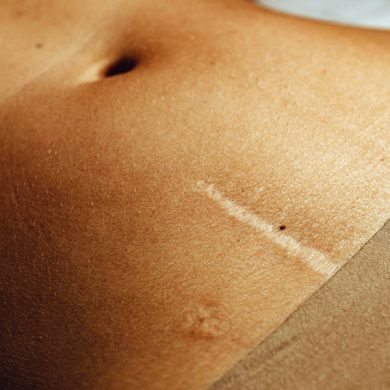
How does massage impact myofibroblasts?
Massage can help “reset” myofibroblast activity by influencing collagen remodeling, reducing fibrosis, and promoting tissue repair through mechanisms like mechanical stress and enhanced circulation. By applying mechanical forces, massage can modulate fibroblast activity, influence the extracellular matrix, and break down scar tissue, which helps to restore more normal tissue function and reduces the overactivity that can lead to issues like fibrosis.
Mechanical stress and remodeling. Massage applies mechanical force to tissues, which can influence the behavior of fibroblasts and myofibroblasts. This can help change the orientation of the cells and modulate their activity.
Reduced fibrosis. In conditions where myofibroblasts lead to excessive scarring (fibrosis), massage can help reduce it. Research has shown that massage can promote tissue repair and reduce fibrosis by remodeling collagen, which is the main component of the extracellular matrix that myofibroblasts produce.
Enhanced circulation. Massage can improve circulation, bringing more oxygen and nutrients to the tissues and helping to clear waste products that can contribute to tissue damage and inflammation.
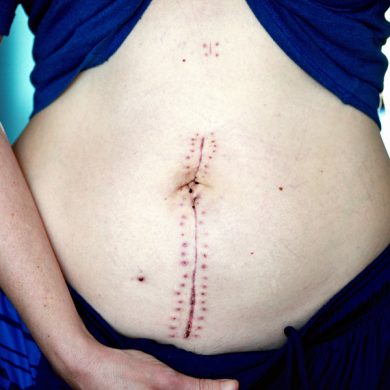
Surgical Scars
The surgical area may feel unusually hard or firm.
Lumps or small nodules form beneath the skin’s surface.
The skin may feel overly tight or restricted in the affected area.
Changes in skin color are noted, such as reddening or darkening.
The skin may appear uneven or irregular from its usual texture and appearance.
There is a feeling of discomfort or pain in the affected area.
The range of motion or flexibility is limited around the surgery site.