 Sondra
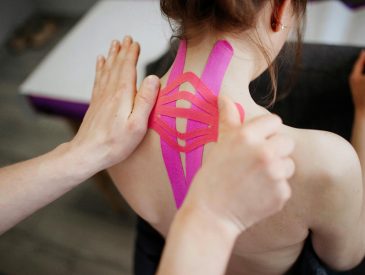
 Myofascial release (MFR) is a manual therapy technique aimed at alleviating pain and restoring movement by releasing tension in fascia. Fascial restrictions can cause chronic pain and lead to musculoskeletal dysfunction. MFR centers on the fascia — the connective tissue that surrounds muscles, organs, and nerves — by applying gentle, sustained pressure onto restrictions to help ease pain and restore motion. Research indicates that myofascial release can lead to significant improvements in pain levels and mobility.
What is fascia?
Fascia is connective tissue found throughout the body which is woven like a three-dimensional web from front to back, head to foot. Fascia provides structure and communication throughout the entire body and functions as a transport medium for nutrients and waste products. It also seems to store tissue memory and emotions.
Trauma, inflammatory responses, and/or surgical procedures create myofascial restrictions that can produce tensile pressures of approximately 2,000 pounds per square inch.
Restrictions and tightness in the fascial tissue can put pressure on structures such as joints, nerves and organs, causing pain. These fascial restrictions do not show up on standard imaging (x-rays, myelograms, CAT scans, electromyography, etc.) and can be caused by a multitude of factors, including prolonged postures, repetitive motions, inflammatory processes, surgeries, falls, and both physical and emotional trauma.
What is myofascial release, and how does it work?
MFR is a mind/body therapy which involves applying gentle and sustained pressure into the restriction without sliding on the skin or forcing the tissue. This produces piezoelectricity (bioelectrical energy) combined with mechanotransduction (biochemical signals), which influences cell behavior and physiology at a biochemical level. The solidified ground substance of the fascial system becomes more fluid, and the tissue softens, creating a structural change in the fascial web — this can be felt by the practitioner as lengthening, softening or movement.
What are myofascial interventions?
Instrument assisted soft tissue mobilization (IASTM) is a skilled myofascial intervention used for soft-tissue treatment and is based on the principles of James Cyriax cross-friction massage. The purpose of friction massage is to maintain the mobility within the soft tissue structures of ligament, tendon, and muscle and prevent adherent scars from forming. The massage is deep and must be applied transversely to the specific tissue involved, unlike the superficial massage given in the longitudinal direction parallel to the vessels which enhances circulation and return of fluid.
Active release technique (ART) is a soft-tissue method that focuses on relieving tissue tension via the removal of fibrosis or adhesions which can develop in tissues as a result of overload due to repetitive use. Fibrosis and adhesions may lead to muscular weakness, numbness, aching, and tingling or burning sensations. ART involves applying sustained pressure directly to the restricted fascia. Its aim is to elongate and soften the fascia, restoring its normal function.
Indirect myofascial release focuses on the body’s natural ability to release tension. The practitioner applies gentle pressure, allowing the fascia to release on its own, often resulting in a feeling of relaxation.
Stretching involve gentle stretching of the fascia and underlying muscles and helps improve flexibility and range of motion.
Positional release technique (PRT) is a manual therapy approach that aims to relieve pain and muscle tension by placing the body in a position of comfort. This technique focuses on restoring normal muscle function and reducing discomfort.
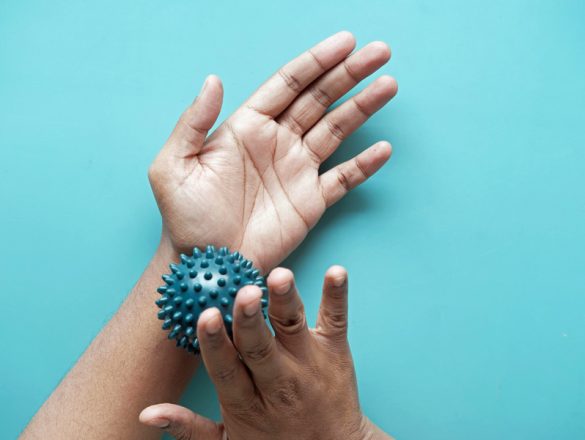
Self-myofascial release utilizes tools like foam rollers or massage balls to allow individuals to perform MFR on themselves. This method can be integrated into daily routines to maintain fascial health.
Advanced myofascial release technique for chronic pain management. Physiopedia.
Research
Bordoni, B., & Zanier, E. (2013). Skin, fascias, and scars: Symptoms and systemic connections. Journal of Multidisciplinary Healthcare.
Drinkwater, E., Latella, C., Wilsmore, C., et al. (2019). Foam rolling as a recovery tool following eccentric exercise: Potential mechanisms underpinning changes in jump performance. Frontiers in Physiology.
MacDonald, G., Penney, M., Mullaley, M., et al. (2013). An acute bout of self-myofascial release increases range of motion without a subsequent decrease in muscle activation or force. Journal of Strength and Conditioning Research.
Pearcey, G., Bradbury-Squires, D., Kawamoto, J., et al. (2015). Foam rolling for delayed-onset muscle soreness and recovery of dynamic performance measures. Journal of Athletic Training.
Additional Information
9 of the best self-myofascial massage techniques to overcome pain | Tune Up Fitness
Advanced myofascial release technique for chronic pain management | Physiopedia
Does foam rolling muscles work? | The Ohio State University Wexner Medical Center
Fascial stress theory: An approach to scar reduction in massage | Massage Magazine
How to use a spikey massage ball: A comprehensive guide | Motion Myotherapy
Massage therapist’s guide to myofascial release | Massage Magazine
Muscle pain: It may actually be your fascia | John Hopkins Medicine
Myofascial release technique: What is it good for and how does it work? | PainHero
Myofascial release therapy | Cleveland Clinic
Myofascial release therapy: Can it relieve back pain? | Mayo Clinic
Our understanding of fascia: From “packing material” to central role | Massage Magazine
Research investigates self treatment for sore muscles | Memorial University of Newfoundland
The science behind foam rolling and why it helps your recovery | Axis Sports Medicine
Therapeutic insight: The John F. Barnes’ myofascial release perspective — The importance of myofascial release | Massage Magazine
Therapeutic insight: The myofascial release perspective — New myofascial release principles | Massage Magazine
What is myofascial release, and does it work? | Healthline
What to know about myofascial release therapy | Web MD
What you need to know about myofascial release therapy | Dr. Cindy Jakubiec