Microcurrent therapy, often called microcurrent electrical neuromuscular stimulation (MENS), is an electrotherapy that uses low-level, sub-sensory currents (in microamperes) to mimic the body’s natural bio-electrical signals; microcurrent units produce electrical current just above the levels of the electrical exchanges that occur at a cellular level in the human body. This is why microcurrent is readily accepted by the body’s cells when applied to the body using conductive electrodes. Unlike traditional muscle stimulators that cause contractions, MENS aims to promote tissue repair, reduce inflammation, and accelerate healing at the cellular level

The theory behind microcurrent therapy is that introducing a surface application of microamperes to the body can restore lost positive and negative electrons. These electrons are the very essence of every living cell. The body can utilize this outside source of minute electrical currents to accelerate its healing mechanisms.

When cells are damaged, they become electrically imbalanced. Because microamperes are close to the electrical level of the body’s cells, applying microcurrent can help rebalance a cell’s electricity — this returns damaged cells to a normal state and initiates cellular activity. Electrical current naturally takes the path of least resistance through the body, which means at the site of an injury, the body’s electrical current will go around the defect rather than through it.

The body’s own electrical current likes to go around any injury, taking the path of least resistance, and it’s an ongoing process to heal damaged cells and microcurrent. By applying microcurrent to the site of an injury, the microamperes current can pick up where the body fails. Through regular microcurrent treatments, the current can gradually close the gap and help heal the damaged area. This helps stimulate healing, accelerates the body’s healing process, and increases the adenosine triphosphate (ATP) level.

Benefits of Microcurrent

Microcurrent therapy has many known benefits and is an excellent foundation for other therapies. Some benefits include:

— Improves circulation and dilates blood vessels
— Accelerates nerve regeneration
— Stimulates lymph circulation
— Increases adenosine triphosphate (ATP) production
— Lengthens connective tissue
— Reduces adhesion formation and mitigates fibrosis

Microcurrent and adenosine triphosphate (ATP).

Some biologists consider ATP as the “currency of life.” It is a dynamic reservoir of energy that is integral to the function of nearly every cell in the body.

ATP is used in muscle contraction, protein biosynthesis, and nerve transmission. One of the exciting elements of microcurrent therapy is that research has shown that applying microamperes can increase ATP production by up to 500%. This information can be found in the study by Cheng, et al. (1982), “The effects of electric currents on ATP generation, protein synthesis, and membrane transport of rat skin.”

This is important because ATP supplies can often become diminished at the site of an injury. Also, unlike other forms of electric therapy, microcurrent has a cumulative effect on ATP levels. Therefore, by applying microcurrent, ATP levels can be increased, and the body’s healing process accelerates.

Microcurrent differs from TENS.

Based on FDA classification, transcutaneous electrical nerve stimulation (TENS) units cover the complete range of devices that use electrical current applied through the skin. However, traditional TENS units are in the milliamperage range, whereas microcurrent units are in the lower microamperes range. Microcurrent devices start with a microampere (uA) — one-millionth of an amp — rather than a milliampere (mA), which is one-thousandth of an amp.

The popular TENS units in the higher milliamperage range are commonly used as a prescription for pain control as an alternative to prescription drugs. The difference between typical TENS units and microcurrent units is that milliamperes block pain signals to the brain versus microamperes, which provide pain relief and stimulate healing. Microcurrent is a very low level of electrical current that operates in microamperes, and microcurrent therapy is the surface application of this current.

Utilizing Microcurrent Therapy

The variety of units and accessory electrodes make it possible to customize treatments by length of treatments, methods, frequency, etc.

Microcurrent point stimulation (MPS) treats scar tissue and chronic pain and helps clients recover from injuries more quickly. MPS stimulates the nervous system and helps decrease to stress and release internal chemical signals to promote healing and pain reduction.

A study in the Journal of Complementary and Alternative Medicine examined a group of 51 chronic pain patients. These patients were given a test to gauge their pain level both before and after treatment. The study showed that after one treatment of MPS, these patients had a 73% average decrease in pain.

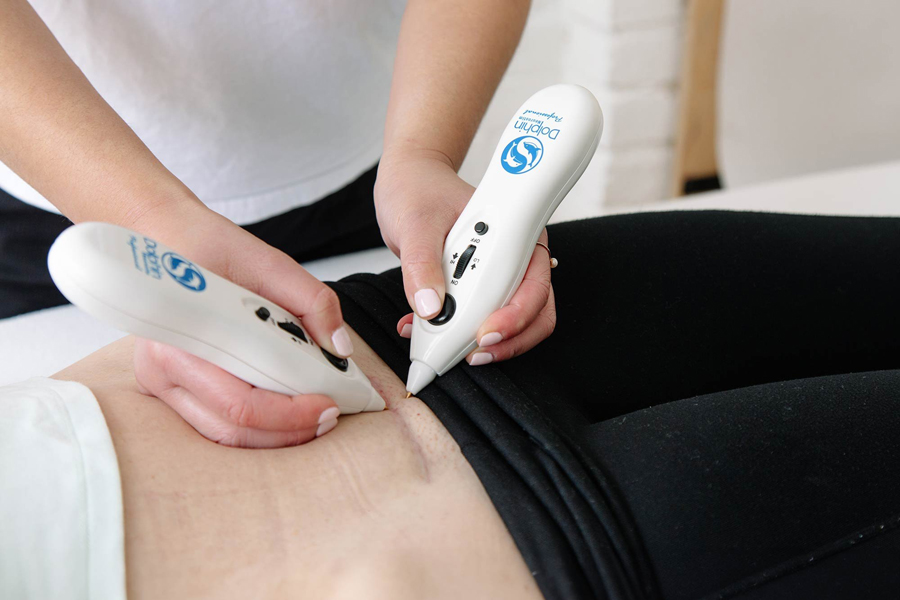
A microcurrent treatment is noninvasive. The Dolphin Neurostim resembles a remote control with a tip on the end — this tip is used to send a small current through tissues of the body, which provides healing benefits.

Armstrong, K., Gokal, R., Durant, J., et al. (2017). The successful treatment of chronic pain using microcurrent point stimulation applied to scars. International Journal of Complementary & Alternative Medicine.


Research — Microcurrent

Allen, C., Williamson, T., Norwood, S., et al. (2023). Do electrical stimulation devices reduce pain and improve function? A comparative review. Pain and Therapy.

Armstrong, K., Chevalier, A., Todorsky, W., et al. (2018). Pain relieving benefits of massage therapy compared to massage therapy combined with microcurrent point stimulation. Journal of Yoga and Physiotherapy.

Armstrong, K., Gokal, R., Chevalier, A., et al. (2017). Microcurrent point stimulation applied to lower back acupuncture points for the treatment of nonspecific neck pain. Journal of Alternative Complementary & Integrative Medicine.

Armstrong, K., Gokal, R., & Todorsky, T. (2019). Treatment of chronic post surgical pain using microcurrent point stimulation applied to C-section scars. Integrative and Complementary Medicine.

Armstrong, K., Gokal, R., & Todorsky, W. (2018). Neuromodulating influence of two electroacupuncture treatments on heart rate variability, stress, and vagal activity. Journal of Integrative and Complementary Medicine.

Armstrong, K., Gokal, R., Todorsky, W., et al. (2018). The successful treatment of chronic pain using microcurrent point stimulation applied to battlefield acupuncture protocol. Journal of Medical-Clinical Research & Reviews.

Bagne, L., Oliveira, M., Pereira, A., et al. (2019). Microcurrent and magnetic electrostimulation: Therapies for the improvement of grafts in bone repair. International Journal of Oral and Maxillofacial Surgery.

Belmonte, R., Tejero, M., Ferrer, M., et al. (2012). Efficacy of low-frequency low-intensity electrotherapy in the treatment of breast cancer-related lymphoedema: A cross-over randomized trial. Clinical Rehabilitation.

Bortolazzo, F., Lucke, L., Fujii, L., et al. (2020). Microcurrent and adipose-derived stem cells modulate genes expression involved in the structural recovery of transected tendon of rats. FASEB Journal.

Cavezzi, A., Paccasassi, S., & Elio, C. (2013). Lymphedema treatment by means of an electro-medical device based on bioresonance and vacuum technology: Clinical and lymphoscintigraphic assessment. International Angiology.

Cheah, Y., Buyong, M., & Yunus M. (2021). Wound healing with electrical stimulation technologies: A Review. Polymers.

Cheng, N., Van Hoof, H., Bockx, E., et al. (1982). The effects of electric currents on ATP generation, protein synthesis, and membrane transport of rat skin. Clinical Orthopaedics and Related Research.

Cheng, R., & Pomeranz, B. (1979). Electroacupuncture analgesia could be mediated by at least two pain-relieving mechanisms; endorphin and non-endorphin systems. Life Sciences.

Chevalier, A., Armstrong, K., & Gokal, R. (2016). Microcurrent point stimulation applied to acupuncture points for the treatment of nonspecific lower back pain. Journal of Alternative Complementary & Integrative Medicine.

Chevalier, A., Armstrong, K., & Gokal, R. (2017). Detailed heart rate variability, exercise tolerance, cortical and vas pain scale analysis of two forms of electro-therapy applied to a patient with chronic back neuropathic pain. Diabetes & Metabolic Syndrome Journal.

Chevalier, A., Armstrong, K., Norwood-Williams, et al. (2016). DC electroacupuncture effects on scars and sutures of a patient with postconcussion pain. Medical Acupuncture.

Cho, S., Sung, W., Lee, Y., et al. (2023). Therapeutic effect of microcurrent therapy in a rat model of secondary lymphedema. Annals of Palliative Medicine.

Chow, J. (2016). Wireless microcurrent-generating antimicrobial wound dressing in primary total knee arthroplasty: A single-center experience. Orthopedic Reviews.

Elio, C., Guaitolini, E., Paccasassi, S., et al. (2014). Application of microcurrents of bioresonance and transdermal delivery of active principles in lymphedema and lipedema of the lower limbs: A pilot study. Italian Journal of Dermatology and Venereology.

Fisher, H. (1992). Acute low back pain treated by spinal manipulation and electronic acupuncture. Journal of Manipulative & Physiological Therapeutics.

Gokal, R., Armstrong, K., Durant, J., et al. (2017). The successful treatment of chronic pain using microcurrent point stimulation applied to scars. International Journal of Complementary & Alternative Medicine.

Gokal, R., Armstrong, K., & Fashong, B. (2020). C-section impact on maternal and fetal health. Positive outcomes with micro point stimulation of C-section scars. Journal of Internal Medicine: Science & Art.

Inoue, M., Nakajima, M., Hojo, T., et al. (2012). Spinal nerve root electroacupuncture for symptomatic treatment of lumbar spinal canal stenosis unresponsive to standard acupuncture: a prospective case series. Acupuncture in Medicine.

Jonik, S., Rothka, A., & Cherin, N. (2025). Investigating the therapeutic efficacy of microcurrent therapy: A narrative review. Therapeutic Advances in Chronic Disease.

Kim, G., Roh, B., Park, S., et al. (2020). Effect of tooth-brushing with a microcurrent on dentinal tubule occlusion. Dental Materials Journal.

Koh, K., Lim, G., Por, Y., et al. (2025). Wireless micro current stimulation (WMCS) therapy to enhance burn wound healing: A randomized clinical trial. Burns.

Kolimechkov, S., Seijo, M., Swaine, I., et al. (2023). Physiological effects of microcurrent and its application for maximising acute responses and chronic adaptations to exercise. European Journal of Applied Physiology.

Koopman, J., Vrinten, D., & van Wijck, A. (2009). Efficacy of microcurrent therapy in the treatment of chronic nonspecific back pain: A pilot study. The Clinical Journal of Pain.

Lagoumintzis, G., Zagoriti, Z., Jensen, M., et al. (2019). Wireless direct microampere current in wound healing: Clinical and immunohistological data from two single case reports. Biosensors.

Lee, H., Cho, S., Kim, D., et al. (2024). Bioelectric medicine: Unveiling the therapeutic potential of micro-current stimulation. Biomedical Engineering Letters.

Lee, H., Hwang, D., Lee, M., et al. (2022). Micro-current stimulation suppresses inflammatory responses in peptidoglycan-treated RAW 264.7 macrophages and Propionibacterium acnes-induced skin inflammation via TLR2/NF-κB signaling pathway. International Journal of Molecular Sciences.

Lumanauw, D., & Pangayoman, R. (2017). Wireless microcurrent stimulation therapy for wound healing. Cermin Dunia Kedokteran.

Luo, Y., Huang, S., Pathak, N., et al. (2021). An integrated systematic approach for investigating microcurrent electrical nerve stimulation (MENS) efficacy in STZ-induced diabetes mellitus. Life Sciences.

Madan, P., Sah, S., Sharma, G., et al. (2024). Bioelectric surgical sutures: Advancing wound healing through mechano-electrical stimulation. International Journal of Surgery Open.

McMakin, C. (2004). Microcurrent therapy: A novel treatment method for chronic low back myofascial pain. Journal of Bodywork and Movement Therapies.

Muresan, D., Voidazan, S., Salcudean, A., et al. (2022). Bioresonance, an alternative therapy for mild and moderate depression. Experimental and Therapeutic Medicine.

Naclerio, F., Moreno-Perez, D., Seijo, M., et al. (2021). Effects of adding post-workout microcurrent in males cross country athletes. European Journal of Sport Science.

Nair, H., & Balakrishnan, A. (2023). Use of microcurrent adjunct wound therapy in a patient with peripheral vascular disease: A case study. Wounds Asia.

Oh, H., Kim, J., & Park, R. (2008). The effects of microcurrent stimulation on recovery of function and pain in chronic low back pain. Journal of Korean Society of Physical Medicine.

Preetam, S., Ghosh, A., Mishra, R., et al. (2024). Electrical stimulation: A novel therapeutic strategy to heal biological wounds. RSC Advances.

Ramadhinara, A., & Poulas, K. (2013). Use of wireless microcurrent stimulation for the treatment of diabetes-related wounds: 2 case reports. Advances in Skin & Wound Care.

Sabel, B., Zhou, W., Huber, F., et al. (2021). Non-invasive brain microcurrent stimulation therapy of long-COVID-19 reduces vascular dysregulation and improves visual and cognitive impairment. Restorative Neurology and Neuroscience.

Saranya, B., Ahmed, J., Shenoy, N., et al. (2019). Comparison of transcutaneous electric nerve stimulation (TENS) and microcurrent nerve stimulation (MENS) in the management of masticatory muscle pain: A comparative study. Pain Research and Management.

Tsolakidis, S., Rosenauer, R., Schmidhammer, R., et al. (2022). Wireless microcurrent stimulation improves blood flow in burn wounds. Burns.

Ud-Din, S., Perry, D., Giddings, P., et al. (2012). Electrical stimulation increases blood flow and haemoglobin levels in acute cutaneous wounds without affecting wound closure time: Evidenced by non-invasive assessment of temporal biopsy wounds in human volunteers. Experimental Dermatology.

Wang, S., Liang, R., Yang, H., et al. (2023). Electroacupuncture for relieving itching in atopic eczema: study protocol for a multicenter, randomized, sham-controlled trial. Frontiers in Medicine.

Whitcomb, E., Monroe, N., Hope-Higman, J., et al. (2013). Demonstration of a microcurrent-generating wound care device for wound healing within a rehabilitation center patient population. Journal of the American College of Clinical Wound Specialists.

Wirsing, P., Habrom, A., Zehnder, T., et al. (2015). Wireless micro current stimulation — An innovative electrical stimulation method for the treatment of patients with leg and diabetic foot ulcers. International Wound Journal.

Wirsing, P., Konstantakaki, M., & Poulas, K. (2019). Martorell’s ulcer successfully treated by wireless microcurrent stimulation technology. Advances in Skin & Wound Care.

Xu, X., Zhang, H., Yan, Y., et al. (2021). Effects of electrical stimulation on skin surface. Acta Mechanica Sinica.

Zhang, J., Huang, S., Gao, X., et al. (2021). Influence mechanism of heavy metal removal under microcurrent action. Separation and Purification Technology.

Zhao, M., Song, B., Pu, J., et al. (2006). Electrical signals control wound healing through phosphatidylinositol-3-OH kinase-gamma and PTEN. Nature.

Research — Nervous System

Bruno, R., Ghiadoni, L., Seravalle, G., et al. (2012). Sympathetic regulation of vascular function in health and disease. Frontiers in Physiology.

Joyner, M., Charkoudian, N., & Wallin, B. (2010). Sympathetic nervous system and blood pressure in humans: Individualized patterns of regulation and their implications. Hypertension.

Lambert, E., Dawood, T., Straznicky, N., et al (2010). Association between the sympathetic firing pattern and anxiety level in patients with the metabolic syndrome and elevated blood pressure. Hypertension.

Lambert, E., Hering, D., Schlaich, M., et al. (2012). Advances in sympathetic nerve recording in humans. Frontiers in Physiology.

Zhang, D., & Anderson, A. (2014). The sympathetic nervous system and heart failure. Cardiology Clinics.

Additional Information

Bioelectricity scholarly research | Monterey Cellular Therapy
Electrical stimulation in wound healing | Wetling Health
Healing wounds, reducing pain, and improving lives SLIDES Clover Medical Solutions
How do we explain what microcurrent is and what it does? | Greg Martin Skin
Is this 5-minute microcurrent facial better than botox? | Healthline
Microcurrent electrical neuromuscular stimulation | Physiopedia
Microcurrent point stimulation: Benefits and science | Pantheon Research
Microcurrent point stimulation: A new hope | USA Today
The natural bioelectrical wound healing process | Wetling Health
Taking the pain out of wound healing with microcurrent electrical stimulation therapy | Wounds International

The content of this site, such as text, images, graphics, and other material, is for informational purposes only. This content is not intended to be a substitute for professional medical advice, diagnosis, or treatment. Always seek the advice of a qualified physician or other health provider regarding any medical condition.