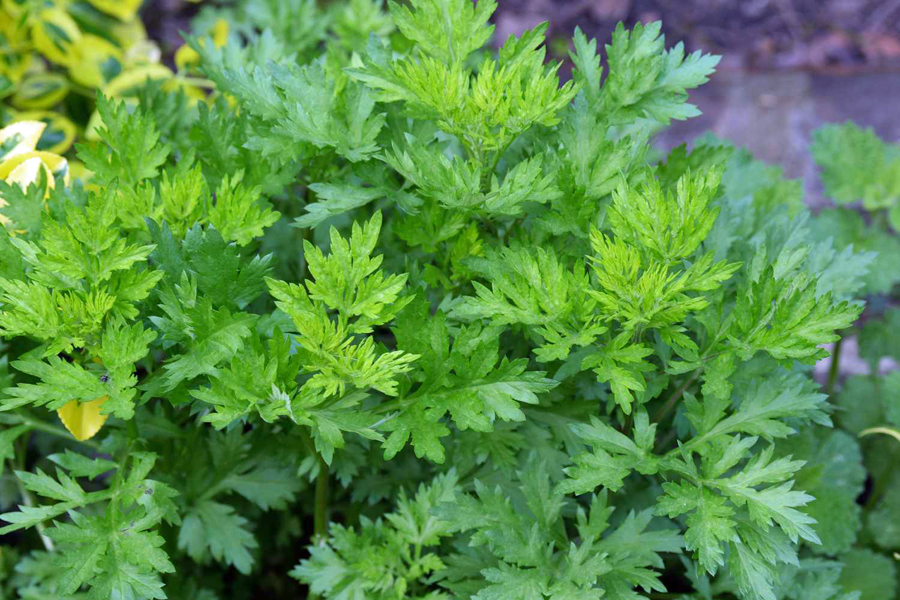
Moxa is the processed, dried, and ground form of mugwort (Artemisia vulgaris), an aromatic plant used primarily in traditional East Asian medicine.
Mugwort is a perennial plant in the daisy family known for its silver-green leaves and volatile oils (such as camphor). When mugwort leaves are dried, aged, and ground into a fluffy wool-like substance, it becomes moxa.
Moxibustion is the practice of burning moxa — either directly on the skin or indirectly near specific acupuncture points — to warm the body, stimulate circulation, and regulate qi and blood.
Physiological effects of moxa on tissues
Moxibustion delivers thermal and biological stimulation to the skin, muscles, and deeper tissues through the burning of dried mugwort.
Deep thermal penetration. The slow-burning heat penetrates both shallow and deep layers of skin and soft tissue, providing a sustained, warming sensation that relaxes tight muscle fibers and eases joint stiffness.
Improved microcirculation and blood flow. Thermal and herb-mediated stimulation dilates local blood vessels, enhancing local microcirculation, blood flow, and lymph fluid movement in the treated area.
Expulsion of cold and dampness. In traditional East Asian medicine, moxa warms the channels to disperse cold and damp pathogens associated with chronic aches, arthritis, and menstrual cramping.
Cellular and immune response. Studies suggest moxibustion can activate local tissue cells, support white blood cell production, and help mitigate local inflammation.
Soft tissue and scar remodeling. It is sometimes used to help soften adhesions, old injuries, or surgical scar tissue by encouraging local circulation and tissue relaxation.
An alternative to moxibustion
Moxibustion and heat therapy lamps (such as infrared or TDP lamps) are both used in East Asian medicine to warm tissues and promote local circulation. Combining moxa with a heat therapy lamp bridges traditional herbal warmth and modern thermal technology. Lamps provide a broader, non-invasive source of radiant or far-infrared heat to warm larger regions of muscles or joints.
A TDP lamp (short for Teding Diancibo Pu, meaning “special electromagnetic spectrum” lamp) is a therapeutic heating device commonly used in acupuncture, physical therapy, and traditional Chinese medicine. Unlike a standard red-light or heat lamp, a TDP lamp features a special heating plate covered with a mineral layer containing up to 33 essential trace elements (such as zinc, copper, magnesium, and selenium), ionized trace minerals intended to be absorbed through localized micro-circulation. When the plate is electrically heated, it emits far-infrared heat and deep penetrating warmth.
Benefits of heat therapy lamps
Infrared and TDP lamps help create a clean, smoke-free, warming environment when compared to moxibustion.
Increased microcirculation. Heat dilates capillary vessels and improves local blood and lymphatic flow, delivering oxygen and nutrients to tissues while clearing out cellular waste.
Relief of pain and inflammation. Heat calms sore joints, arthritis symptoms, and muscle tension.
Loosened muscles and fascia. Heat reduces myofascial trigger points, muscle spasms, and stiffness (often used to warm up the body before acupuncture, massage, or exercise).
Accelerated healing. Heat supports tissue regeneration for minor sprains, strains, tendonitis, and soft-tissue recovery.
Safety
Mugwort belongs to the Asteraceae family, and individuals with sensitivities to ragweed or mugwort should exercise caution.
Research
Dawes, N., & Anastasi. J. (2022). The Case for Moxibustion for Painful Syndromes: History, principles and rationale. Current Research in Complementary & Alternative Medicine.
Deng, H., & Shen, X. (2013). The mechanism of moxibustion: Ancient theory and modern research. Evidence-Based Complementary and Alternative Medicine.
Xiang, W., Jiang, J., Hu, T., et al. (2022). The efficacy and safety of moxibustion for pressure injury: A protocol for systematic review and meta-analysis. Medicine.
Additional Information
Moxibustion: What is it and does it work? | Cleveland Clinic
The traditional and modern uses of mugwort | Eat Weeds
What is moxibustion? | Web MD