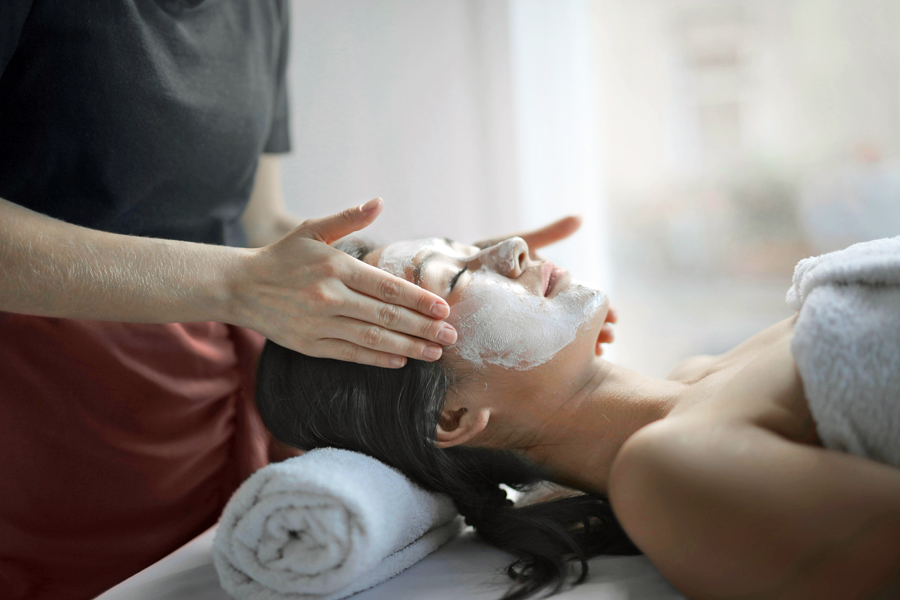
Aftercare for Facials
♦ Try to avoid washing your face the same day after a facial. The best facials need to soak into your skin.
♦ Allow your skin to recuperate. Avoid wearing makeup or using any other products for one or two days following a facial.
♦ Avoid dry skin. Daily, gentle application of a mild, fragrance-free moisturizer will help with dryness.
♦ Avoid sun exposure. UV rays can further aggravate the skin. If you must go out, gently apply a good sunblock.
What are possible side effects of facials?
There are some typical adverse effects which some individuals may develop after a facial:
♦ The most typical side effects of a facial are redness and blotchy skin, which can be possibly related to the exfoliation pressure and any extractions or allergies to products used during the procedure.
♦ Exfoliation may leave the skin feeling dry and sensitive.
♦ Extractions can result in small wounds and slight bleeding.
♦ Bacteria on the surface of the skin can be introduced into the underlying layers of the skin during a facial, typically causing post-facial outbreaks.
Who should not have a facial?
Those with facial rashes, bruises or swelling, abrasions or broken skin, cold sores, sunburns, during chemotherapy, taking medications which may affect treatment, or having recent scar tissue (less than six months old).
What should you not do before a facial?
Do not use skincare treatments or products which could irritate your skin two to three days before a facial — that means no toners, exfoliants, new products, or acne treatments. Products with vitamin C and retinol should be avoided, as well as direct sunlight and high heat.
How often should you get a facial?
It takes new skin cells about four weeks to generate — and you want to wait for your new skin turnover before your next treatment.