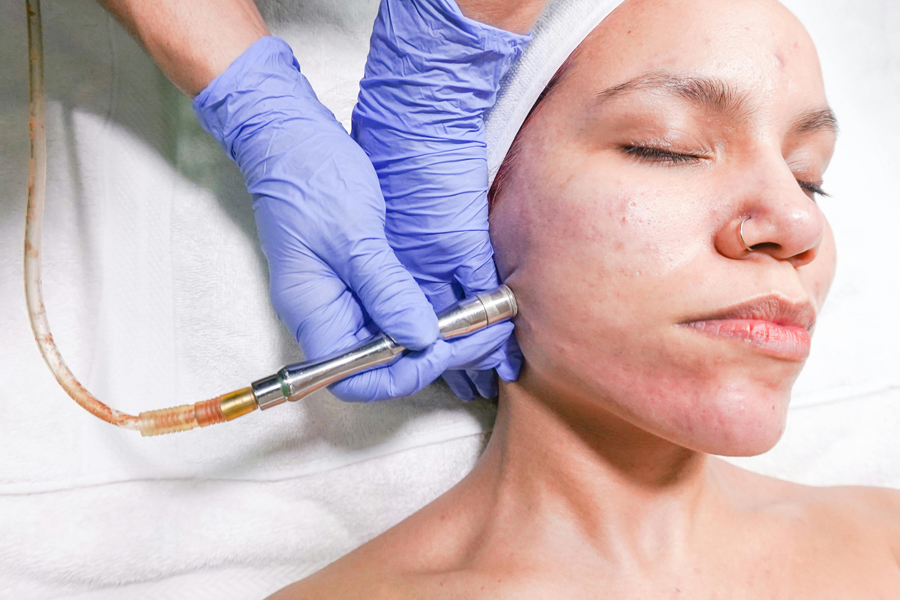
Aftercare for Microdermabrasion
♦ Avoid dry skin. Daily, gentle application of a mild, fragrance-free moisturizer will help with dryness.
♦ Avoid sun exposure. UV rays can further aggravate the skin. If you must go out, gently apply a good sunblock.
♦ Avoid rubbing the skin or wearing makeup. Avoid these for at least 72 hours.
♦ Avoid harsh products. Avoid facial scrubs, hair removers, benzoyl peroxide, or glycolic acid products for at least one week.
♦ Be gentle with your skin. Avoid harsh waxing and exfoliating for at least one week.
What are possible side effects of microdermabrasion?
Typical side effects which some individuals may develop after microdermabrasion:
♦ The skin may be dry and flaky for a day or two, or longer if you have sensitive skin.
♦ Bruising can occur from the suction and may last several days.
♦ Redness and swelling should subside within a few hours.
♦ Bacteria on the surface of the skin can be introduced into the underlying layers of the skin, typically causing post-service outbreaks.
Who should not have microdermabrasion?
Those with facial rashes, bruises or swelling, abrasions or broken skin, cold sores, sunburns, during chemotherapy, pregnancy, those with hyperpigmentation tendencies, inflamed rosacea or acne, infectious diseases, fragile skin or couperose skin, those with recent cosmetic surgeries (less than six months old), laser resurfacing, chemical peels, or microdermabrasion, recent injectables, fillers, or Botox, those using Retin-A or other medications that exfoliate or thin the skin.
What should you not do before microdermabrasion?
Do not use skincare treatments or products which could irritate your skin two to three days before a facial — that means no toners, exfoliants, or new products.
How often should you have microdermabrasion?
It takes new skin cells about four weeks to generate — and you want to wait for your new skin turnover before your next treatment.