
This case study will use electrotherapy to address swelling and fibrosis of lipedema.
Fibrosis in lipedema is a form of scar tissue. It occurs when chronic inflammation and tissue stress cause connective tissue (collagen) to build up and replace normal, flexible tissue. This creates firm, nodular lumps under the skin that make lipedema fat feel harder than normal fat.
“Regular” scar tissue often restricts movement and causes “puckering” because the collagen fibers clump together. Electrical stimulation can be used to repolarize this tissue, helping the fibers realign in an organized matrix so the skin glides smoothly. The current can break the rigid bonds and improve skin elasticity, relieving the tightness and discomfort. The electrical stimulation increases blood flow and cellular energy (ATP) to the area, which promotes the growth of healthy tissue and reduces inflammation.
About This Study
Goals of this case study include:
1. Decrease in swelling
2. Decrease in pain
3. Softening of tissue
4. Improvement in circulation and lymphatic movement
5. Improvement in mobility
Benefits of electrotherapy include:
1. Stimulation of the parasympathetic nervous system, which also contributes to a decrease in inflammation
2. An increase in adenosine triphosphate (ATP) production, fueling cellular repair and regeneration
3. An increase in ATP helps fibroblasts generate up to 14% more collagen and 48% more elastin
4. Stimulation of blood flow to deliver oxygen and nutrients while encouraging the drainage of stagnant lymph fluid
5. Disruption of bacterial biofilms
Important:
Please keep in mind that this intervention is meant to serve as an adjunct to therapies already being utilized, such as manual lymph drainage, or an addition to any self care in which the participant currently engages. This therapy is not a substitute for care and should not interrupt the participant’s regular routine of care.
How the Study is Conducted
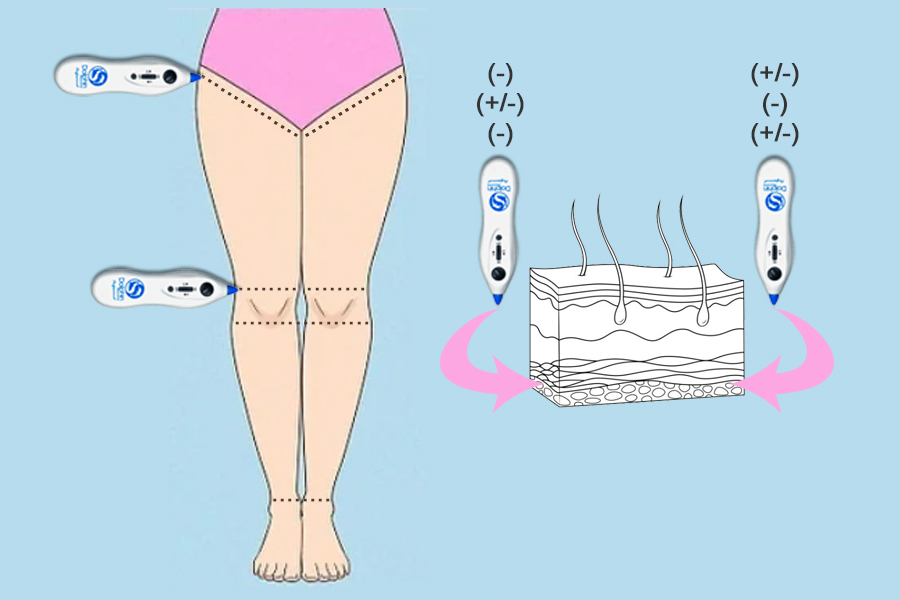
The Dolphin Neurostim device will be used and delivers low-frequency direct current stimulation. This device is designed to emulate the natural, low-level electrical currents found within the human body to stimulate cellular changes in tissues, organs, and fascia. Unlike traditional transcutaneous electrical nerve stimulation (TENS) units that use higher-voltage alternating current, the Dolphin uses gentle, low-intensity current in microamperes.
The current is applied to specific points 0.25″ apart along the length of the leg (see diagram) (or arm, if you desire), along the top of the thighs to above the knees and from below the knees to the ankles, both on the front and back surfaces of each extremity. The microcurrent is then delivered for 30 seconds spanning these points along the leg, targeting the dermis and subcutaneous adipose tissue. This method is used primarily for facilitating scar release.
Three passes are made across the skin. Dolphin scar release therapy uses a combination of negative polarity (-) and biphasic polarity (+/-) applied with two devices on opposite ends of the leg (or arm). This electrical flow repolarizes the area, calming the sympathetic nervous system and releasing localized fibrosis and aberrant collagen deposition. Because the current is thousands of times lower than traditional TENS units, it is generally comfortable and non-invasive, with many users feeling only a mild tingling sensation.
Requirements
Appointments are available in Oro Valley at the Desert Lotus Clinic on Monday through Friday from 10:00 AM to 4:00 PM. I also have a treatment room at my home in Marana, in San Lucas (exit 236), and can make appointments for Friday evenings after 5:30 PM, and on Saturdays and Sundays as needed.
One visit weekly for six (6) weeks is required. A visit consists of application of electrotherapy to the lower extremities, which will last approximately 60-90 minutes. If your plan includes scar release, add approximately 30 minutes to the visit.
The first (#1) and last (#6) visits will include measurements of all extremities, along with nonidentifying photos of all extremities. Please add 30-45 minutes for those appointments.
After each visit, you will be asked to fill out a short wellness assessment to document your current symptoms and report activities and feedback. This online assessment is done weekly and should be completed within two (2) days of your visit.
If you’re interested in participating, please complete this form. Thank you!