
Diosmin
Plants contain a large number of flavonoids, and diosmin, a flavone glycoside, is a flavonoid found in citrus fruits. Diosmin was first found in 1925 in the wort plant and has since been used as a natural treatment for hemorrhoids, varicose veins, venous insufficiency, leg ulcers, and other circulatory issues.
The most commonly-used and widely-studied venoactive drug (VAD) is micronized purified flavonoid fraction (MPFF), which has found to be effective at all stages of chronic venous disease (CVD). It has been shown to significantly reduce leg pain and leg heaviness and swelling, as well as ankle edema and functional discomfort. Experiments employing animal models of CVD have demonstrated that MPFF has anti-inflammatory and venotonic effects at the microvalve level.
Diosmin is a VAD that works on blood vessels in a variety of ways to improve circulation. It improves lymphatic drainage and microcirculation as well as venous tone and suppleness. It is often used to improve vascular health and in the treatment of chronic venous insufficiency and hemorrhoids when combined with other flavonoids, particularly hesperidin.
Because of its characteristics, diosmin is a good therapeutic treatment for a variety of disorders. It has antioxidant and anticancer characteristics and scavenges oxygen free radicals, lowering oxidative stress levels — it reduces oxidative stress by altering the activity of particular enzymes and promotes apoptosis in a variety of cancer cell lines via several ways. Diosmin also has anti-diabetic and mild anti-bacterial properties. It has the ability to lower the levels of numerous inflammation markers and helps alleviate the consequences of diabetes, such as neuropathy and dyslipidemia.
Recommended by Dr. Karen Herbst, 500 mg to 900 mg by mouth once or twice daily.
Belcaro, G., et al. (2017). Management of varicose veins and chronic venous insufficiency in a comparative registry with nine venoactive products in comparison with stockings. The International Journal of Angiology.
Davidson, K. (2020). Diosmin: Benefits, dosage, side effects, and more. Healthline.
Diosmin. (n.d.) Drugs.com.
Diosmin. (n.d.) Healthline.
Diosmin. (n.d.) National Library of Medicine.
Diosmin. (n.d.). WebMD.
Huwait, E., and Mobashir, M. (2022). Potential and therapeutic roles of diosmin in human diseases. Biomedicines.
“The complex diosmin + hesperidin (90% diosmin and 10% other flavonoids expressed as hesperidin) has also been widely studied; it appears to be less powerful and effective than Venoruton® (oxerutins) and pycnogenol in patients with chronic venous insufficiency; it is definitely less potent than pycnogenol alone and needs a dosage some 10 times higher than pycnogenol.”
— From the research paper Management of varicose veins and chronic venous insufficiency in a comparative registry with nine venoactive products in comparison with stockings
Diosmiplex
Diosmiplex, going by the prescription name Vasculera, is a prescription medical food containing purified diosmin (MPFF), a high-quality ingredient that has been designated “generally recognized as safe” (GRAS), the highest standard of safety. Diosmin (MPFF) is a flavonoid isolated from hesperidin, found in citrus, that restores the body’s microcirculatory balance.
Recommended by Dr. Karen Herbst.
Save on Vasculera. $132 for 3 months’ supply.
Primus Care Direct is a hassle-free, mail-order pharmacy service where patients can get their Vasculera prescription for $49 for a 30-day supply or $132 for a 90-day supply ($44 per month), Medicare patients included. This is the lowest possible price available and includes free home delivery. If you have insurance coverage for prescription medical foods, you may pay even less. Vasculera Prescribing Information
Blink Pharmacy Plus also offers a discount on Vasculera.
Research
Bouskela, E., Lugli, M., & Nicolaides, A. (2022). New perspectives on micronised purified flavonoid fraction in chronic venous disease: From microvalves to clinical effectiveness.
Feldo, M., Wojciak-Kosior, M., Sowa, I., Kocki, J., … & Bogucka-Kocka, A. (2019). Effect of diosmin administration in patients with chronic venous disorders on selected factors affecting angiogenesis.
Huwait, E., & Mobashir, M. (2022). Potential and therapeutic roles of diosmin in human diseases.
Lyseng-Williamson, K., & Perry, C. (2012). Micronised purified flavonoid fraction: A review of its use in chronic venous insufficiency, venous ulcers and haemorrhoids.
The content of this site, such as text, images, graphics, and other material, is for informational purposes only. This content is not intended to be a substitute for professional medical advice, diagnosis, or treatment. Always seek the advice of a qualified physician or other health provider regarding any medical condition.
Skin Disorders
Dermatitis herpetiformis
Dermatographia (Dermographic urticaria)
Erysipelas
Livedo reticularis
Lymphomatoid papulosis
Venous eczema (Stasis dermatitis)
Vibratory urticaria
Poison ivy, poison oak and poison sumac
Research
De Pessemier, B., Grine, L., Debaere, M., et al. (2021). Gut-skin axis: Current knowledge of the interrelationship between microbial dysbiosis and skin conditions. Microorganisms.
Rad, S., & Vashisht, P. (2023). Malar Rash. StatPearls Publishing.
More About Skin Disorders
Dermatopathology evaluation of panniculitis StatPearls | National Institutes of Health
Erysipelas StatPearls | National Institutes of Health
NIH scientists discover genetic cause of rare allergy to vibration | National Institutes of Health
What is venous stasis dermatitis? | Web MD
Wound Healing
How wounds heal | John Hopkins Medicine
The four stages of wound healing | Wound Evolution
What to expect during the 4 stages of wound healing | Healthline
Wound healing | Teach Me Surgery
Wound healing stages: How to tell if a wound is healing, infected or chronic | HealthPartners
More About Wound Healing
Wound Healing Phases StatPearls | National Institutes of Health
Additional Information
Things you may not know you could be allergic to | Cleveland Clinic
More women think shaving pubic hair is ‘hygenic’ despite greater health risks | Independent
Waxing versus shaving: What is the best method for hair removal? | Starpil Wax
Shaving versus waxing: What’s better for your skin? | Cleveland Clinic
What’s the difference between waxing and shaving? | Healthline
The content of this site, such as text, images, graphics, and other material, is for informational purposes only. This content is not intended to be a substitute for professional medical advice, diagnosis, or treatment. Always seek the advice of a qualified physician or other health provider regarding any medical condition.
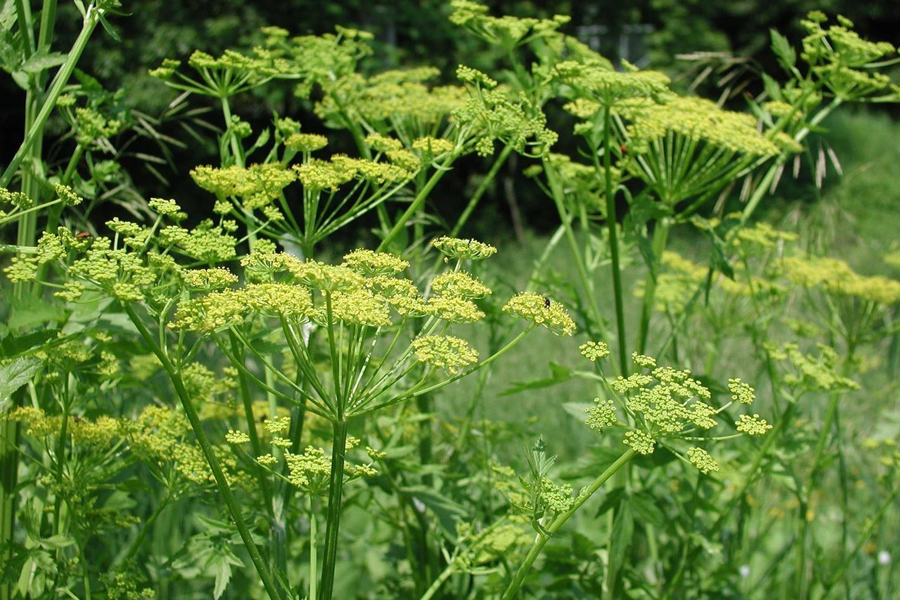
Plants to Avoid: Wild Parsnip
When out enjoying nature, it’s crucial to recognize plants which are toxic. Some plants are toxic and cause harm through physical contact, resulting in various skin reactions and injuries.
Plants can cause rashes and irritation. Poison ivy, poison oak, and poison sumac contain urushiol, an oil that triggers an itchy, blistering rash in most people upon contact. Contact with the sap of giant hogweed can cause severe skin irritation, blistering, and increased sensitivity to sunlight, resulting in skin irritation, blistering, and discoloration when exposed to sunlight. The sap of wild parsnip is similar to giant hogweed. Stinging nettles are covered in tiny hairs that inject histamine and formic acid upon contact, causing an immediate burning and itching sensation. Other plants which can cause contact dermatitis include chrysanthemums, milkweed, and fig trees.
Plants can cause mechanical injuries to the skin. The spines of cacti can easily puncture the skin, potentially leading to immediate irritation, pain, and swelling. If not removed completely, spines can cause inflammation, infection, and granulomas. Roses and other plants with thorns or spines can scratch or puncture the skin, leading to wounds that can become infected if not cleaned properly. Plants like prickly lettuce have sharp hairs or bristles and can cause mechanical irritation or break off and embed in the skin.
Wild Parsnip
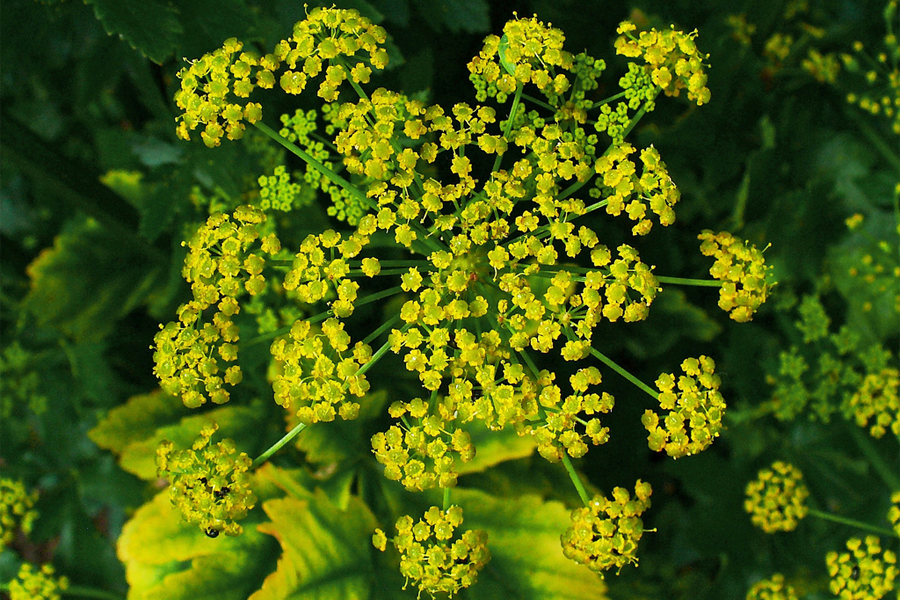
Wild parsnip (Pastinaca sativa) is an invasive plant, originally from Europe and Asia, that has naturalized in North America. It is known for its potential to cause severe skin reactions upon contact due to the presence of furocoumarins in its sap. These chemicals can cause phytophotodermatitis, leading to burns, blisters, and skin discoloration. Wild parsnip is commonly found in disturbed areas like roadsides, trails, and open fields.
Wild parsnip is a biennial plant, meaning it typically lives for two years, flowering in its second year. It has a long, tuberous, cream-colored root and yellow flowers arranged in compound umbels (flat-topped clusters). The leaves are pinnately compound, meaning they are made up of multiple leaflets arranged along a central stem. Wild parsnip thrives in disturbed areas like roadsides, trails, and open fields. It can also be found in natural areas, pastures, and forest margins. It is considered invasive because it can readily naturalize from garden-grown seed and spread rapidly in disturbed environments.
The sap of wild parsnip contains furocoumarins, which can cause a severe skin reaction when exposed to sunlight. Skin contact with the sap can lead to redness, blistering, and discoloration. Avoid contact with the plant, especially when it’s sunny. Wear protective clothing (long sleeves, long pants, and gloves) if you need to work around it. Stay on trails — avoid areas where wild parsnip is known to grow. Thoroughly clean clothing and equipment and wash any sap from clothing, equipment and pets.
Identifying Wild Parsnip
Wild parsnip is a biennial flowering herb on a single stem that grows to 5 feet tall. Its leaves consist of 2 to 5 pairs of leaflets that grow across from each other along the stem, with one diamond-shaped leaflet on the end — the leaflets are toothed and often shaped like a mitten. It features yellowish-green flowers which form umbrella-shaped clusters from 4-8 inches across; flowers bloom in June and July. Its stem is green, 1-2 inches thick, and smooth with few hairs. Other members of the carrot family, including cow parsnip, angelica and Queen Anne’s lace, are often misidentified as wild parsnip.
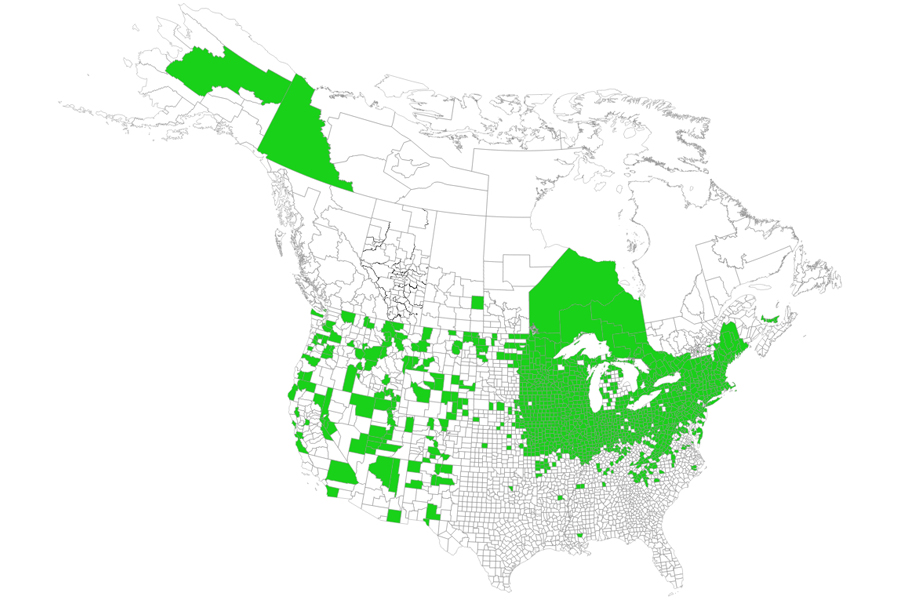
Wild parsnip tolerates a range of soils and moisture levels but requires sun. It’s often found in open areas, pastures, fields, roadsides and disturbed areas. Wild parsnip is widespread throughout the United States except in Florida, Georgia, Alabama, Mississippi and Hawaii.
Wild parsnip spreads aggressively through seeds carried by wind, water and equipment. Stem, leaves, and flowers contain chemicals that can increase skin sensitivity to sunlight and cause severe rash or blistering.
Additional Information on Wild Parsnip
Don’t eat this type of parsnip! University of Minnesota Extension
Invasive species: Wild parsnip. Michigan Invasive Species
Wild parsnip. Cornell University Weed Identification
Wild parsnip. Invasive Species Centre
Wild parsnip. Minnesota Department of Agriculture
Wild parsnip. Minnesota Department of Natural Resources
Wild parsnip. New York Invasive Species Information
Wild parsnip. Ontario Invading Species Awareness Program
Wild parsnip. University of Vermont Extension
Wild parsnip. Wisconsin Department of Natural Resources
Printable Information on Wild Parsnip
Be aware of wild parsnip. Minnesota Department of Transportation
Wild Parsnip. Michigan.gov
Wild Parsnip. New York State Department of Environmental Conservation
The content of this site, such as text, images, graphics, and other material, is for informational purposes only. This content is not intended to be a substitute for professional medical advice, diagnosis, or treatment. Always seek the advice of a qualified physician or other health provider regarding any medical condition.
Manual Lymphatic Drainage
Manual lymphatic drainage (MLD) is a gentle massage technique that aims to stimulate the lymphatic system, which is responsible for filtering waste and fluids from the body. There are different approaches in training and performing manual lymphatic drainage.
Vodder — Several hand motions are used on the skin surface, depending on the part of the body being treated. Vodder also includes edema movements at fibrotic areas. The different motions include “pump,” “scoop,” “stationery circle,” “rotary” and “thumb circle.”
Foldi — This method is based on the Vodder technique but places emphasis on a “thrust” and “relaxation” phase. “Encircling strokes” are included in this approach.
Casley-Smith — This method involves the use of gentle and slow effleurage movements with the side of the hand. The effleurage movements are performed over the “watershed” areas between lymphotomes.
Leduc — This method involves use of “calling up” (or enticing) and “reabsorption” movements which reflect how lymph is absorbed first in the initial lymphatics and then into larger lymphatics.
Foldi and Vodder refer to two methods of manual lymphatic drainage (MLD), a specialized massage technique used to stimulate the lymphatic system and reduce swelling. Vodder is the original method, while Foldi is an extension of it, incorporating a thrust and relaxation phase with circular hand motions.
Benefits of MLD
MLD can effectively reduce swelling and can provide symptomatic relief of migraine headaches, fibromyalgia, rheumatoid arthritis, scleroderma, reflex sympathetic dystrophy, stress, fatigue, and more. It is important to seek MLD services from a therapist who is specially trained in one of these methods, as the techniques are specific and require expertise.
Extensions of MLD
Reflexology
Reflexology targets and stimulates specific areas in the hands, feet, face and ears to increase the function of all systems for the greatest optimal health throughout the zones of the body — reflexology gently encourages the body, from the inside out, to heal itself. There are several reflexes for the lymphatic system on the feet and hands. The Reflexology Lymph Drainage technique is a unique sequence which has been researched and found to aid the function of the lymphatic system. Encouraging lymph movement through reflexology is beneficial for clients without insurance, clients who are wanting to remain dressed during treatment, clients who are wanting an alternative to manual lymph drainage, and those clients who are wanting to boost their health.
Manual lymphatic drainage. (n.d.) Physiopedia.
Electro Lymphatic Therapy
Lymphatic enhancement technology | Lymph Star Pro
Hivamat
Coming soon!
Additional Information
5 reasons why you need applied MLD | Moving Lymph
How to perform a lymphatic drainage massage | Medical News Today
Lymphatic drainage massage | Cleveland Clinic
Lymphedema pumps versus manual lymphatic drainage VIDEO | Brooks Rehabilitation
Massage therapists guide to lipedema PDF | Kathleen Lisson
Poisoned by massage | Pain Science
Reflexology lymph drainage | Reflexology Lymph Drainage
Techniques to use at home to stimulate lymphatic drainage | Gordon Medical
Why MLD should be started as early as possible | Moving Lymph
What are the side effects of lymphatic massage? | Hypervibe
What you need to know about pressotherapy | Healthline